


Blog
Why a Smart Card Wallet Might Be the Best Way to Lock Down Your Private Keys

Okay, so check this out—I’ve been messing with hardware wallets for years. Wow! They feel solid, mostly, but somethin‘ always nags at me. Some devices are clunky, others are over-engineered for everyday use. My instinct said: there has to be a middle ground, and smart card wallets hit that niche in a way that surprised me.
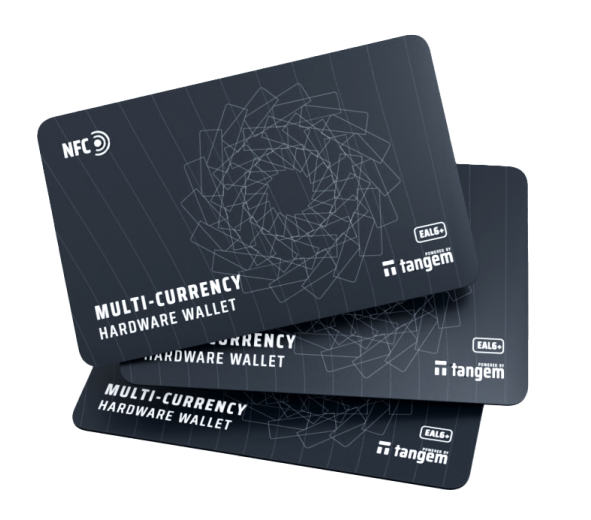
Whoa! NFC-enabled cards are simple and elegant. They slide into your pocket like a credit card and talk to your phone with a gentle tap. For many people, that low-friction interface is the difference between actually using cold storage and ignoring security until it’s too late. On one hand, you want the best possible cryptography; on the other hand, if the user experience sucks, security becomes theoretical. Initially I thought hardware wallets were only for power users, but then I started testing smart card options and realized they might be the missing link for mainstream adoption.
Here’s the thing. Seriously? Yes. Smart cards combine tamper-resistant hardware, discrete form factor, and NFC convenience, which makes them compelling for daily crypto holders. My first impression was skepticism—cards? Really?—but then I tapped one and the flow felt natural, almost like paying at a café. Fast reaction, slow thinking: the underlying security model matters, and these cards usually store private keys in a secure element that never exposes them. Actually, wait—let me rephrase that: the key never leaves the secure element, so transactions are signed inside the card and only the signed data is shared.
Hmm… there’s a caveat. These cards have constraints. Limited UI, constrained power and processing, and sometimes narrower coin support. But those constraints are also strengths. They reduce attack surface, and they force designers to keep flows minimal and clear. On the contrary, full-featured hardware devices try to do everything and sometimes introduce complexity that creates vulnerabilities. I’ll be honest—I like that cards force simplicity. This part bugs me sometimes, though, because the trade-off means you may need companion apps for advanced features.
How Private Keys Stay Private
Short answer: secure elements. Wow. These chips are made to resist tampering and side-channel attacks. A well-designed smart card places the private key into that element and never exports it. Medium-length: the phone or host creates the transaction, sends a payload over NFC, the secure element signs it, and then returns the signed transaction. Longer thought—this architecture limits exposure because even if your phone is compromised, the attacker still can’t extract the raw private key, only attempt to trick the card into signing a transaction, which is where PINs and transaction visualization come into play.
Something felt off about some early card designs. They relied on the host to display transaction details, which can be spoofed. My gut said: demand on-card verification or trusted display. On one hand, you want the convenience of a smartphone; though actually, the most secure path is a separate verifier, or at least strong UX that highlights destination and amount clearly. Initially I thought that was unrealistic for a credit-card-sized device, but designers have found clever ways to show key details via companion apps while using challenge-response protocols and transaction hashing for integrity checks.
What about PINs? Really? Yep, PINs are often the primary access control. Short burst—Seriously?—but they’re usually adequate when combined with secure elements and optional backup methods. Many smart cards support PIN retry limits and wipe on too many failures, which is a pragmatic deterrent. The smarter cards also permit hierarchical deterministic (HD) or single-key setups, depending on how you want to manage backups and recovery. I’m biased, but I prefer an HD-like approach if the workflow supports it—less risk when you rotate addresses or lose a device.
Everyday Use: NFC Makes Security Practical
Tap, confirm, go. Wow! That simplicity kills friction. People will actually adopt secure habits if the process is quick and predictable. Medium explanation: NFC works without pairing, and it keeps the transaction signing entirely in the card’s secure element. Longer thought—this matters because the fewer steps and the fewer times you involve complex UX, the lower the chance of error or social-engineering traps that rely on confusing the user mid-flow.
Okay, so check this out—I’ve used cards while traveling and they beat juggling seed phrases in a hotel room. True story: in Austin once I nearly left my seed written on a napkin, but the card made me feel comfortable enough to use a phone for final confirmations and still feel secure. (oh, and by the way…) That casual confidence is powerful. But don’t get me wrong—cards aren’t magic. If you lose the card, recovery depends on your setup: backups, custodial recovery, or other strategies.
Backup Strategies and Real-World Risks
Backups are where people get tripped up. I know that—I’ve seen it. Short: seed phrases are fragile. Medium: paper backups can be lost, damaged, or photographed. Longer thought—cards invite different recovery models: you can use multi-card backups, split-key schemes, or integrate with social recovery frameworks, and each choice carries trade-offs between resilience and attack surface. On one hand, splitting a key across multiple cards reduces single point of failure, though actually coordinating multiple devices adds complexity that users might resist.
I’ll be honest—I’m not 100% sure which recovery model is perfect for everyone. It depends on risk tolerance, technical comfort, and how often you need access. I’m biased toward multi-layered approaches: keep one backup in a safety deposit box, another in a trusted relative’s possession, and use a deterministic backup for ease of rotation. Minor typo alert: it’s very very important to document what each backup does, otherwise you’ll be left guessin‘ later…
Which Smart Cards Are Worth Considering?
I won’t list every vendor here, but if you’re exploring, look for cards that emphasize a certified secure element, transparent signing flows, and active firmware ecosystems. Something I recommend is checking product pages and independent audits. Also check compatibility with wallets you actually use day-to-day. Initially I thought certification alone was enough, but then I realized real-world usability matters—so firmware updates, app integrations, and community support count a lot.
Check out a practical example—I’ve written up a hands-on review that ties many of these points together, and you can find it linked here. That page walks through setup, daily signing, and backup options, which might save you a bunch of trial-and-error. I’m not endorsing a silver bullet, but I do think it’s a useful reference if you’re considering a card-first approach.
FAQ
Can a smart card be hacked via NFC?
Short answer: extremely unlikely if the card uses a proper secure element. Attackers could try relay or man-in-the-middle attacks, but good designs mitigate that with transaction nonces, challenge-response, and signing verification. Also, NFC range is very short, and practical attacks require proximity and sophisticated gear, which raises the attack cost significantly.
What happens if I lose my card?
That depends on your backup setup. If you’ve stored backup shares or a seed phrase securely, you can restore. Some users keep reserve cards in safe locations. Others use multi-signature arrangements so a single lost card doesn’t doom access. Plan ahead—it’s cheaper than panic later.
Are smart cards suitable for large holdings?
Yes, they can be, especially as part of a layered defense: cold storage cards, multisig, air-gapped policies, and institutional procedures. For very large sums, combine cards with best practices like legal wills, professional custody planning, or multisig with geographically distributed cosigners.